

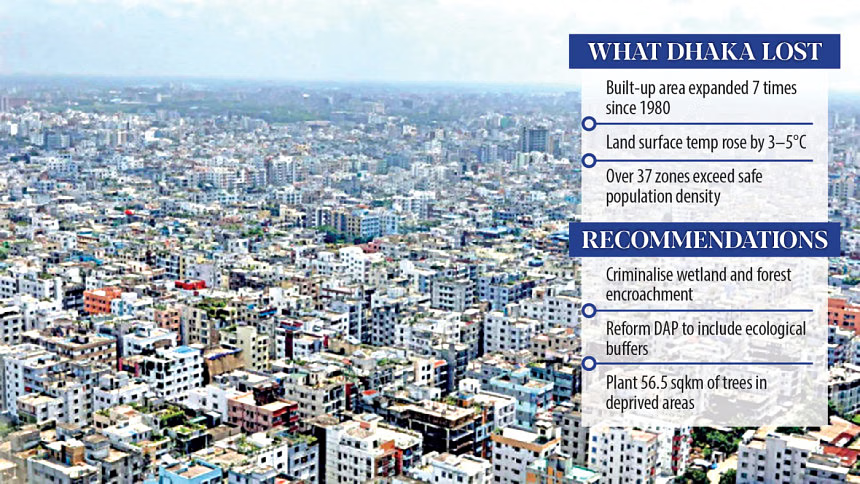
Between 1980 and 2024, Dhaka’s built-up area expanded sevenfold, land surface temperature increased by 3 to 5 degrees Celsius, and the city lost 60 percent of its waterbodies.
hese alarming findings were revealed in a new study by Change Initiative, based on 44 years of satellite imagery and urban heat mapping. The research highlights Dhaka’s severe environmental degradation, driven by unplanned urban expansion.
The study was conducted by M Zakir Hossain Khan, chief executive of Change Initiative, with support from Sabrin Sultana and Md Fuad Hassan.
It was unveiled yesterday at a press conference held at a hotel in Dhaka.
Zakir Hossain warned, “By 2035, Dhaka is projected to reach 25 million residents. With tree coverage down to 11.6 percent, waterbodies at only 1–2 percent, and temperatures rising, the city stands on the brink of climate collapse. Cities like Singapore and Seoul maintain tree cover of 30 to 47 percent. Even Delhi and Jakarta are ahead. Only Karachi ranks below us — and we are headed in that direction fast.”
He stressed the need to reverse this trend by adopting a nature-integrated development model inspired by cities like Singapore — but adapted with local knowledge and equity.

